IT'S not often that a book of short stories as good as Jim Gavin's
Middle Men rolls across our desk -- rarer still when a book of any kind captures Los Angeles, especially its overlooked, non-mythic aspects, quite so intelligently.
And don't take our word for it: The galleys of
Middle Men come with so many raves from execs, editors, and publicists at Simon & Schuster than I can picture dewy office interns being flogged by their bosses, "Write a rave for Gavin now or
you are
out of here!" But it's all in the service of a great work, so we here at The Misread City are happy to see this kind of medieval method applied.

Gavin has been in and around L.A. for a long time, and pursued a number of "failed careers," including gas station manager and quiz-show gopher, and seems to have paid close attention all the way through: There's also an understated comic quality from the very first paragraph.
Among the things we have in common with Gavin are an obsession with California detective writer
Ross Macdonald, a connection to Loyola Marymount University, Irish Catholicism in the family (though less unalloyed than in his), some years on Curson Avenue in the Fairfax district, and some serious damage from the 2008 Wall Street crash.
This dude is there real thing. Check him out at
Skylight Books on March 14. And don't miss
Middle Men.
Here is my Q and A with the author.
These stories seem to view LA
from a number of fresh angles – from the middle you might say. What is your
experience with Los Angeles – what ‘hoods have you lived in and what kinds of
things have you done here?
I’m fourth generation SoCal on my dad’s side, which is always a smug
and annoying thing to say. My dad is an old Long Beach guy, a “scholar and
champion” from Long Beach Poly. I grew up for the most part in Orange, CA.
As a kid, I played tons of sports, went to
the beach in the summer, ate lots of fast food, lost my mind when Gibson went
yard in ‘88. I graduated from Loyola
Marymount University in West LA. While
there I was a DJ for their radio station, KXLU 88.9 FM, which broadcasts all
over Los Angeles. I loved it and spent a
lot of my time going to shows at a lot of places that no longer exist, like
Jabberjaw and the Alligator Lounge.
After college, I worked on the sports desk of the Orange County
Register. Later, I lived up north in
Berkeley for a few years, and when I came back down I lived in Long Beach, in an
apartment called “The Versaille.” It was significantly less opulent than the
one in France. After that, I lived in
the Miracle Mile, within smelling distance of the La Brea Tar Pits. My local tavern was Tom Bergin’s, which
recently went through a bunch of pointless renovations. Basically, they just made the menu more
expensive, and they no longer serve chicken tenders. I’m not happy about these developments.
I moved back up north between 2007-2009, and
then I spent a year in Boston, my first and hopefully last winter.
I currently live in Culver City, a block from
the Culver Studios, in one of those little bungalow courts from the 1920s. I’m pretty sure my apartment is haunted by a
hack screenwriter who hung himself in 1947.
I can walk to Trader Joe’s and the new Expo line station, which is
awesome. I’ve gone downtown more in the last six months than in my previous 36
years of existence. I also love driving
down Sepulveda between Pico and Jefferson, because if you squint, it’s like
your driving through Los Angeles in 1973.
The city, here, seems about as
far from the old “sunshine and noir” trope as I’ve seen in literary treatment.
We don’t have a sense of a palm-treed utopia, a paradise lost, or of a seedy
underbelly. Do feel a connection to any of the classic writers of LA or
California fiction who help build those mythologies?
Ross MacDonald is one of my favorite writers. I’ve probably read more books by him than
anyone, though they do blend together.
But he is brilliant, and Lew Archer is my favorite LA detective
(followed closely by Jim Rockford).
Based on a few off-hand references, I figured out that Archer’s dingy
bachelor apartment was in the Miracle Mile, somewhere north of Pico, and east
of Fairfax. I was living in that
neighborhood when I figured this out, and suddenly the Spanish fourplexes on Curson
Avenue took on a new and brilliant grandeur.
Raymond Chandler casts a long shadow too, of course, and I can’t drive
Mulholland without thinking of him. One
of my great dreams in life is to be tailed by goons. So I love the noir legacy, and part of me
wishes I had the ability to write a detective novel. I love all the great Hollywood novels too. One of the stories in my collection is based
on my experience as a production assistant for a certain game show. It views
Hollywood from the bottom, but I think it still fits in that tradition.
But like the detective novels, most Hollywood
novels are written by people who didn’t grow up here and so they can only see
it as it as a nightmare funhouse populated by tawdry phonies. It certainly is a nightmare, but there is a
whole other realm of experience in Southern California that, like any other
part of the country, can only be captured by someone who has been here a long
time and who can see the place on its own terms, not refracted through the
vision of Hollywood.
In the last few
years, wonderful writers like Victoria
Patterson, Dana Johnson, and Michael Jaime-Becerra have staked out their own
territory, and as a native, reading their work provides a special kind of
pleasure. I get to see a familiar world
for the first time.
Craft typically sets the story
apart from the novel. How do you approach craftsmanship? Where does a story usually
start for you, where does it go from there, and do you revise like crazy?
I always know what I want to write about, I just don’t know how. There will be some experience that haunts me
in some way, but I don’t what the story is. I just know that I can’t get a
certain image or moment or line of dialogue out of my mind. Months will pass, years, and I’ll bang my
head against a wall for a while, but then I’ll write a sentence that has a
certain spark to it . There’s a coiled
energy in the tone and voice, and I try and let that sentence lead the
way.
I had wanted to write the story
“Bermuda” for over a decade. I had
actually been there as a young man on a doomed romantic mission, but I had no
idea what the story was, or who was telling it, until I wrote these sentences:
“Ravens nested in the lemon tree and each morning a woke in the shadow of a
minaret. Plus we had cheap cable.” For whatever reason this gave me the
narrator and the rest of the story fell into place.
I spend a lot of time on the opening page of
a story. Everything has to be
there. The tone, the language, the
hierarchy of characters. The ending is always in the beginning. I tend to revise as I go. I don’t write a
first draft and then go back to the beginning.
Instead, I spin my wheels, rewriting the same sentence over and over,
but I think that’s when you’re writing the rest of the story.
I can’t quite figure out Max
Lavoy – the Walloon quiz show host, self-absorbed history buff, etc. – from the
story “Elephant Doors.” Sometimes I can’t stop thinking about him, either. Give
us a sense of where he came from in your imagination, how he fits into your
vision of the story, the book, the city.
I remember hearing a story about Mad King Otto of Germany. I have no idea if this is historically
accurate, but apparently he got it in his head that if he didn’t execute a
peasant each day, the kingdom would collapse.
So each day his handlers would fetch a peasant who worked the royal
grounds and they would put him in front of a wall and hand Otto a rifle. He’d shoot the peasant and then go about his
day. But as soon as he departed, the
“dead” peasant would get up and go back to work.
The whole thing was staged. The gun shot blanks and the peasant pretended
to get shot. All these people went through
this ridiculous charade every day to appease the whims of a king.
I don’t if this actually happened, but I
think it is a brilliant illustration of how all organizations essentially work. There is a king at the top, and everyone down
below, scrambling to appease. This is
true in the corporate world, in Hollywood, and in many families. I had this in
mind when I was writing the character of Max.
He’s a king, of sorts, and gets whatever he wants, which, in a way,
means he will always be isolated and unhappy.
Someone on the other end of the spectrum, like Adam, the production
assistant, has to perform any number of ridiculous charades while convincing
himself that this kind of humiliation is worthwhile and necessary. Adam is just as narcissistic as Max, but he
at least knows this about himself, and in the end he chooses to humiliate
himself on his own terms, by rededicating himself to stand-up comedy, rather
than jumping through any more hoops for Max.
The book as a whole feels
shadowed by the crash of 2008, and the diminished expectations, that followed
-- without being “jaded” in a hackneyed way. I expect much of it was begun back
in the good old days, but did the downturn have an influence?
Yeah, I think it had a big influence.
My family has always had lots of ups and downs, so being broke isn’t
anything new to us.
In “Play the Man”
there’s a sort of sub-story about the collapse of his family, though the
narrator is too wrapped up in his own life to totally understand what his
parents are going through, financially and emotionally. But this recession got
us good and we lost the house in Orange where I grew up. It was a long and exhausting process and I
still can’t bring myself go down to Orange. It makes me too sad.
At the same time, I feel lucky that I got to
grow up in a house, and I can only hope that I can provide something similar if
I ever have kids. A simple middle class
wish, but it’s becoming harder and harder to come by, especially in California.
Our house already had multiple mortgages but
the whole bankruptcy/foreclosure process started in earnest after 2008
crash. I remember those months, the
shame, the fear, the insomnia, the sense that something had been irretrievably
lost. That mood definitely worked it’s
way into the stories, especially “Bewildered Decisions in Times of Mercantile
Terror.”
It seems the worst of it is
over, but like everyone else, my dream is no longer to get rich, it’s simply to
get out of debt.
One element that sticks out is
what I’ll call “non-Latino Catholicism,” or judging from your surname, Irish
Catholicism. How did growing up with some relationship to the church (school
perhaps) shape your approach to seeing and writing?
It’s been a huge influence. I grew up with a lot of kids whose parents
were born in Mexico and Central America, so when I think of the Catholic
Church, I’m more likely to think of Archbishop Romero and the Maryknoll
sisters, than the grandeur of St Peter’s Basilica.
My parents made a lot of sacrifices to put me
and my sisters through Catholic elementary school and high school and later I
went to a Jesuit college. I have fond
memories of all those places, but that has more to do with the people I was
lucky enough to meet than with any real understanding of the Church.
In typical lapsed fashion, I had to drift
away from the Church to finally become interested in its history and
theology. Sixteen years of Catholic
school and I was never assigned the Divine
Comedy! I had to discover all that
on my own, and sadly I think that’s pretty common.
Everything that is beautiful
and inspiring about the Church has been buried under the rubble of a few
conservative talking points and the ongoing horror of the sex abuse
scandals.
All the characters in the
collection come out of this parochial environment, and though Catholicism isn’t
always foremost on their minds, they can’t escape its influence, and they see
the world accordingly. My favorite
songwriter, Dan Treacy of Television Personalities, has a beautiful line in
“Everything She Touches Turns to Gold”:
Catholic
school, the pain the guilt
My
story is no different to tell
Every
young man’s hell
Just
waiting for the bell
That could be another epigram for the collection. In fact, I’m kind of annoyed that I didn’t
use it.
In any case, there is the pain
and the guilt but there is also this idea of mercy that I think plays a central
roll in the book. I think we all want
mercy, and a few of the protagonists are lucky enough to find a person who is
selfless enough to provide it.
Congrats on Middle Men. What’s next for Jim Gavin?
I’m working on a novel and trying to improve my golf game. I play at
Los Feliz. $7 for nine holes and the
greens are littered with cigarette butts. If I can start hitting under 30 on a
consistent basis, I will be very happy.
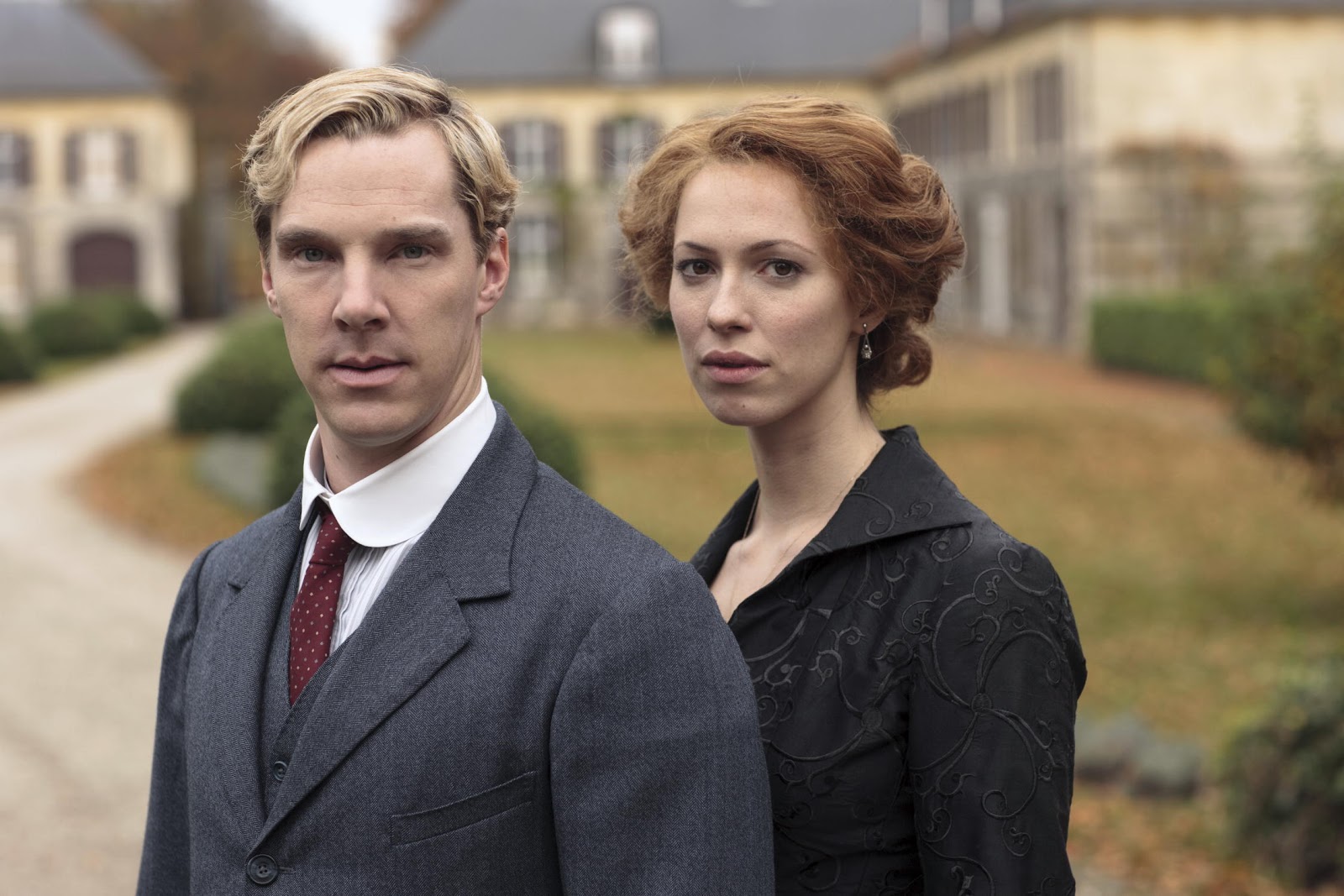
.jpg) Yours truly had a story today on the miniseries and the process of adapting a very long and difficult text. It meant, among other things, that I got to sip coffee with Stoppard at the Chateau Marmont while the crew set up for the Vanity Fair party. (Overall, I'd rather have a serious conversation with a major writer, so I don't mind not being invited this year.)
Yours truly had a story today on the miniseries and the process of adapting a very long and difficult text. It meant, among other things, that I got to sip coffee with Stoppard at the Chateau Marmont while the crew set up for the Vanity Fair party. (Overall, I'd rather have a serious conversation with a major writer, so I don't mind not being invited this year.)